OEKO-TEX Certified Labels for Textiles and Apparel
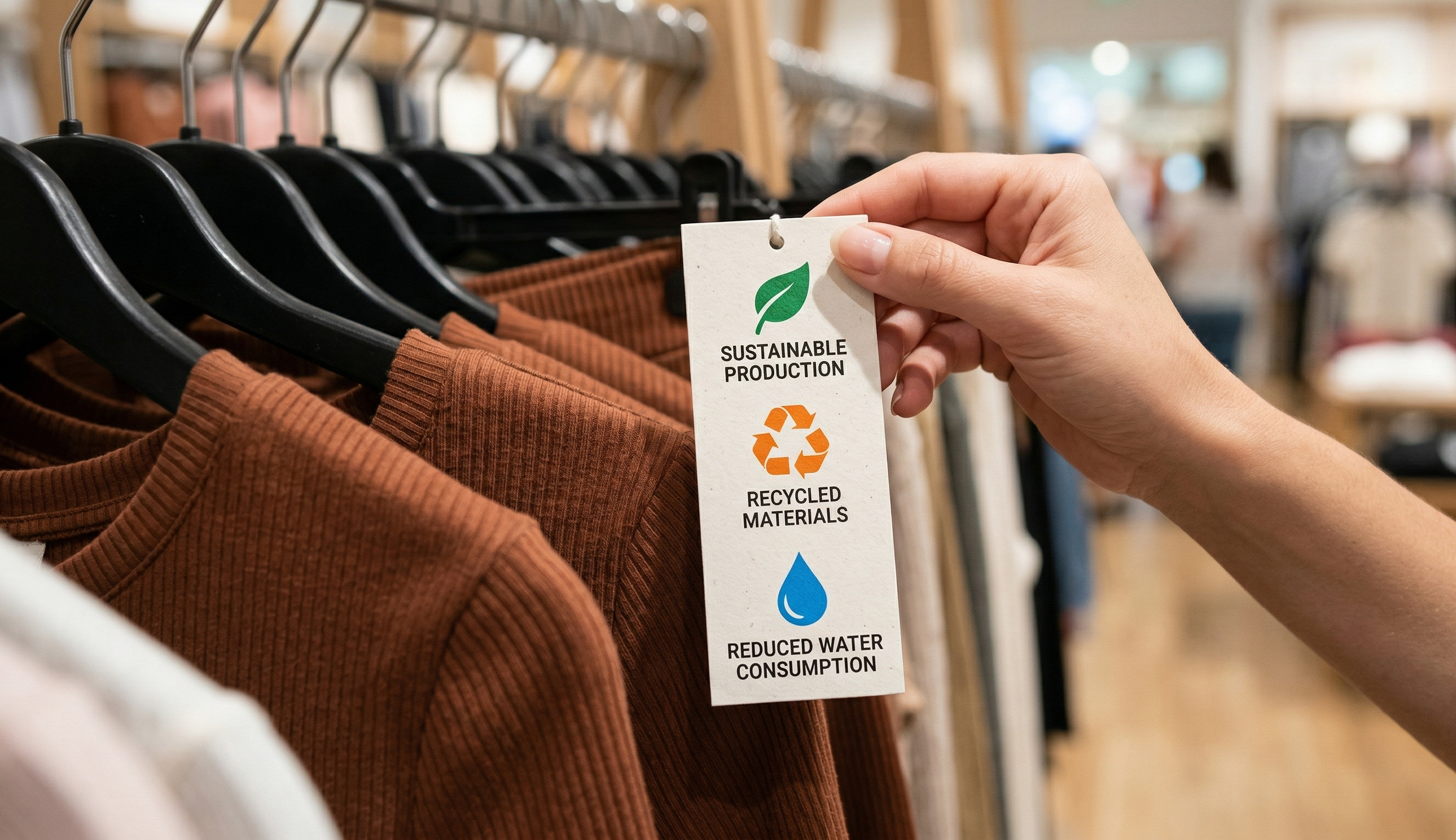
OEKO-TEX certified label suppliers manufacture textile labels—woven brand labels, printed care labels, and hang tags—using materials independently tested for harmful substances according to STANDARD 100 requirements. The certification verifies that labels touching skin contain no restricted chemicals, heavy metals, or allergenic dyes above safe thresholds.
For apparel brands and manufacturers, sourcing from certified suppliers has shifted from competitive advantage to baseline requirement. This guide covers what OEKO-TEX certification means, which certification types apply to labels, how to verify supplier claims, and what distinguishes reliable certified partners.
What is OEKO-TEX certification
OEKO-TEX certified label suppliers provide textile labels tested for harmful substances, ensuring safety and quality according to STANDARD 100 requirements. The certification comes from independent testing institutes like Hohenstein, which screen labels for chemicals that could pose health risks. When you source from a certified supplier, you're getting labels verified by third-party labs rather than relying on supplier claims alone.
The testing covers over 100 substance classes. Think formaldehyde, heavy metals, pesticides, and allergenic dyes. Labels that pass testing receive a certificate number that buyers can verify online.
OEKO-TEX carries recognition across major retail markets in Europe, North America, and Asia. Many global brands now list it as a baseline requirement for textile components, which makes it less of a differentiator and more of a practical necessity for suppliers.
Why OEKO-TEX certified labels matter
Consumer trust and product safety
Labels sit directly against skin, often for hours at a time. A woven brand label at the neckline or a care label at the waistband touches sensitive areas throughout the day.
Certified labels signal to end consumers that the product passed rigorous safety testing. Not just the garment fabric, but every component touching their body. For children's clothing and intimate apparel, where skin sensitivity runs higher, this matters even more.
Global retailer compliance
Major retailers and department stores increasingly mandate OEKO-TEX certification as a sourcing condition. Without certified labels, suppliers may find themselves excluded from purchase orders regardless of price or quality.
The certification also simplifies compliance documentation during audits. Rather than explaining internal testing protocols, suppliers can present standardized certificates that buyers already recognize.
Harmful substance protection
OEKO-TEX testing covers substances that conventional quality checks often miss:
- Formaldehyde: Used in fabric finishing, can cause skin irritation
- Heavy metals: Lead, cadmium, and nickel from dyes and pigments
- Pesticides: Residues from cotton cultivation
- Phthalates: Plasticizers in printed labels and coatings
- Allergenic dyes: Azo dyes that can release harmful amines
A label might look perfect and feel soft, yet still contain residues that only laboratory testing can detect.
OEKO-TEX certification types for textile labels
OEKO-TEX STANDARD 100
This is the most common certification for textile components including labels, tags, and trims. It tests the finished product for harmful substances rather than the production facility.
Products fall into four classes based on skin contact and user sensitivity: Class I covers baby products (ages 0-3) with the most stringent testing. Class II covers skin contact items with high testing strictness. Class III covers non-skin contact items with moderate testing. Class IV covers decorative materials with standard testing.
Woven brand labels and printed care labels typically fall under Class II. Hang tags may qualify as Class III or IV depending on placement.
OEKO-TEX MADE IN GREEN
MADE IN GREEN combines product safety testing with verified sustainable production facilities. Products carrying this label include a unique product ID that consumers can scan to trace manufacturing locations and conditions.
For brands emphasizing supply chain transparency, MADE IN GREEN offers a stronger story than STANDARD 100 alone. However, it requires facility-level certification in addition to product testing, which not all suppliers can provide.
OEKO-TEX ECO PASSPORT
ECO PASSPORT certifies the chemicals and colorants used in textile production rather than finished products. While label buyers rarely request this certification directly, it indicates that a supplier's input materials have been pre-screened for safety.
Suppliers using ECO PASSPORT certified dyes and finishes can often achieve STANDARD 100 certification more efficiently, since their raw materials already meet threshold requirements.
OEKO-TEX certified label products
Woven brand labels
Woven labels carry brand identity and serve as the first tactile impression of product quality. When produced with OEKO-TEX certified yarns, woven labels meet safety requirements while maintaining crisp definition and color accuracy.
Recycled yarn options are increasingly available from certified suppliers. At Etiteks, approximately 35% of woven label production uses recycled yarn, produced on Swiss-made Müller weaving machines with Italian Willy cutting and folding equipment.
Printed care labels
Printed labels communicate wash instructions, fiber content, and country of origin. Because printed care labels often sit against sensitive areas like the neck or waistband, substrate safety matters as much as print durability.
Certified substrates include satin, recycled satin, cotton, and organic cotton. High-resolution printing delivers lasting legibility while maintaining the soft hand feel that prevents skin irritation. Etiteks produces up to 15 million printed labels monthly, with a significant share on recycled satin and organic cotton substrates.
Cardboard hang tags and packaging
While OEKO-TEX focuses on textiles, cardboard labels and boxes benefit from complementary certifications. FSC certification verifies responsible forestry practices, while recycled content percentages indicate environmental commitment.
Etiteks produces up to 10 million cardboard units monthly on Germany-origin Heidelberg machines, with approximately 45% made from recycled paper and FSC-certified (FSC-C183770) stock.
How to verify an OEKO-TEX certified supplier
OEKO-TEX label check on oeko-tex.com
Every certified product carries a unique label number that can be verified through the official OEKO-TEX Label Check tool at oeko-tex.com. Enter the certificate number to confirm validity, certification scope, and expiration date.
This verification step takes seconds and eliminates uncertainty about supplier claims. Legitimate suppliers will readily provide certificate numbers for buyer verification.
Certificate and test report documentation
Beyond online verification, request current certificates and test reports directly from suppliers. Certificates display the certified product categories, testing institute, and validity period.
OEKO-TEX certificates require annual renewal with updated testing. A certificate from two years ago no longer provides valid assurance, so always confirm the expiration date before placing orders.
Independent testing institute authorization
Only authorized OEKO-TEX partner institutes can issue certifications. Hohenstein operates as a primary testing body, with additional authorized institutes located across Europe, Asia, and the Americas.
If a supplier claims certification from an unfamiliar testing body, verify that organization's authorization status through the official OEKO-TEX website before accepting the certificate.
What to look for in an OEKO-TEX certified label supplier
Production capacity and reliability
Certification alone doesn't guarantee delivery performance. Evaluate suppliers based on monthly capacity, machinery investment, and facility infrastructure.
Suppliers operating multiple production facilities can better absorb demand fluctuations and maintain consistent output. Etiteks operates 4 facilities in Istanbul with 40 million monthly capacity across woven, printed, and cardboard labels, supported by 50+ expert personnel and 30+ machines.
Multiple sustainability certifications
Leading suppliers hold certifications beyond OEKO-TEX that demonstrate deeper commitment to responsible production:
- GOTS: Organic textile processing standards
- GRS: Recycled content verification
- OCS/RCS: Organic and recycled claim standards
- FSC: Responsible forestry for paper products
- Sedex: Ethical trade and labor practices
Etiteks requests certifications including GOTS, GRS, OCS, RCS, Oeko-Tex, and Sedex from material suppliers, creating accountability throughout the supply chain.
Custom design and finishing capabilities
Certification matters little if a supplier cannot execute your design requirements. Evaluate capabilities for custom woven patterns, precise color matching, and finishing options like cutting, folding, and specialty coatings.
An in-house design team can translate brand guidelines into production-ready specifications, reducing revision cycles and ensuring consistency across product lines.
International export experience
Suppliers exporting to multiple countries understand varying compliance requirements, documentation needs, and shipping logistics. Etiteks exports to 60+ countries, which translates to smoother order processing and fewer customs delays.
Partner with a certified label manufacturer
Working with an established, multi-certified supplier simplifies compliance while ensuring consistent quality at scale. Etiteks, Turkey's first organic-certified label manufacturer, sources OEKO-TEX certified materials and holds GOTS, GRS, OCS, RCS, and Sedex certifications across product lines.
With 40+ years of experience since 1983, Etiteks delivers woven labels, printed care labels, and cardboard packaging from a single integrated partner.
FAQs about OEKO-TEX certified label suppliers
How much does OEKO-TEX certification cost for label suppliers?
Certification costs vary based on product range, testing scope, and the number of product categories submitted. Suppliers typically pay testing fees plus annual certification maintenance. Contact an authorized OEKO-TEX partner institute directly for customized quotes based on your specific product portfolio.
Which organizations grant OEKO-TEX certification for textile labels?
OEKO-TEX certifications are issued exclusively by authorized partner institutes such as Hohenstein, TESTEX, and other regional testing bodies. Partner institutes conduct independent laboratory testing according to standardized protocols. The full list of authorized institutes appears on the official OEKO-TEX website.
Can custom-designed labels receive OEKO-TEX certification?
Yes, custom woven, printed, and cardboard labels can achieve OEKO-TEX certification provided all materials and components pass required testing. The certification applies to the finished product regardless of design complexity, though each distinct material combination may require separate testing.
What is the difference between OEKO-TEX STANDARD 100 and GOTS certification?
OEKO-TEX STANDARD 100 tests finished products for harmful substances without requirements for organic content. GOTS certifies organic fiber content (minimum 70%) and sustainable processing throughout the supply chain, including environmental and social criteria. Many brands pursue both certifications for comprehensive coverage.
How long does OEKO-TEX certification remain valid for suppliers?
OEKO-TEX certificates are valid for one year from the issue date. Suppliers undergo annual renewal testing to maintain certification status. Always verify certificate expiration dates when evaluating suppliers, as outdated certificates no longer provide valid assurance.
Let's talk about your labeling and packaging needs.
Get a Quote