Care Label Requirements for Textiles in Europe 2026
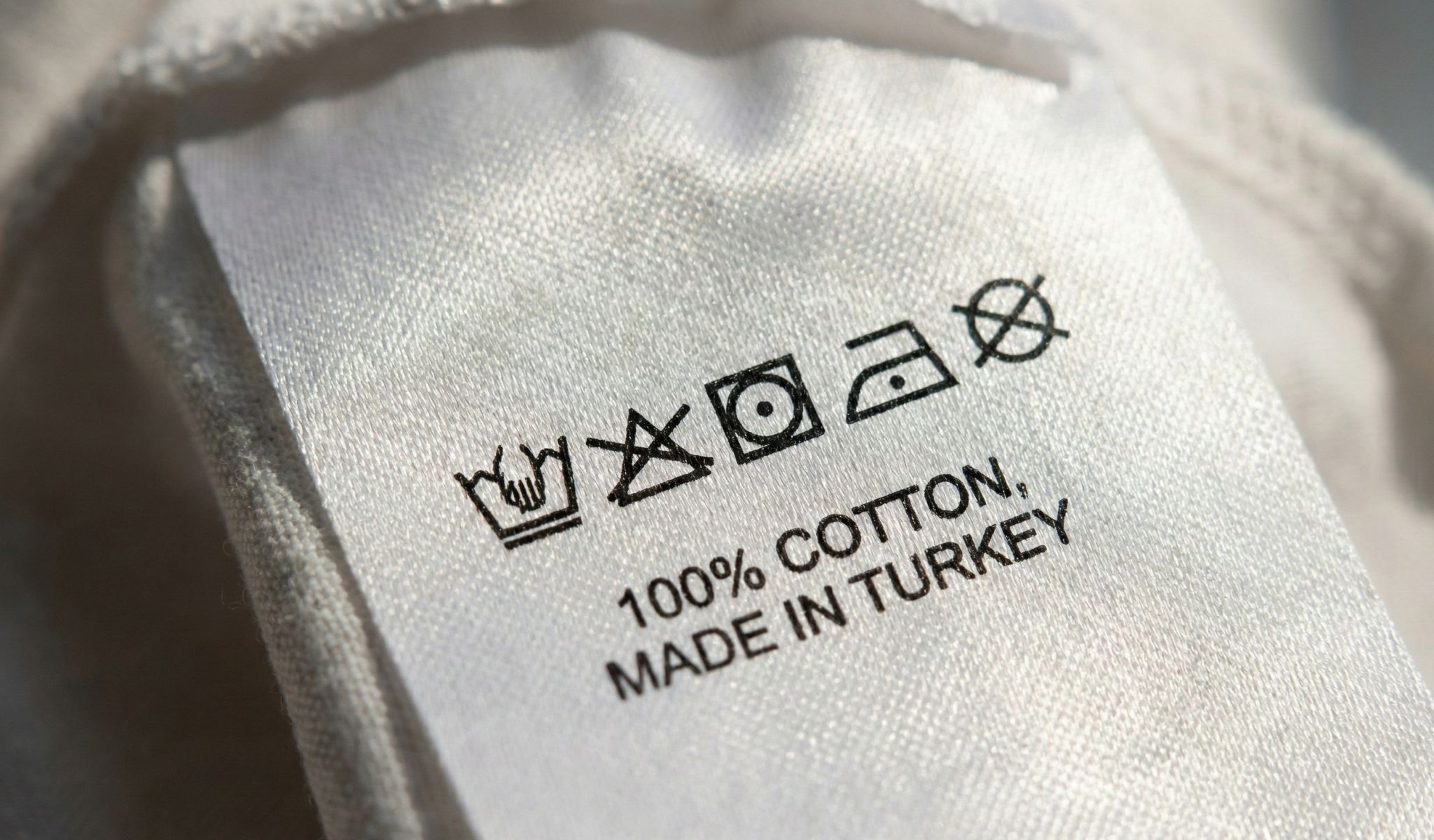
Selling textiles in the EU without proper care labels won't land you in jail, but it might land you in a product liability dispute. EU Regulation 1007/2011 mandates fiber composition labels — not care instructions — yet the General Product Safety Regulation effectively makes care labels necessary for any brand that wants to avoid claims when a customer shrinks their sweater.
This guide covers what EU textile labelling regulations actually require, how care symbols work under ISO 3758, where country-specific rules apply, and how to select a label supplier that keeps you compliant across European markets.
What Is a Care Label
In the EU, textile labels are required to be durable, legible, and securely attached, with fiber composition displayed in the local language of the member state where sold. Care labels, though, are something different. They're the sewn-in or printed tags that tell consumers how to wash, dry, iron, and professionally clean a garment without ruining it.
A fiber composition label tells you what a product is made of — "100% Cotton" or "70% Polyester, 30% Viscose." A care label tells you how to take care of it. The symbols on care labels follow ISO 3758:2012, an international standard administered in Europe by GINETEX.
Are Care Labels Legally Required in the EU
The short answer: not exactly. Care labels aren't strictly mandatory under EU Regulation 1007/2011, the main textile labelling law. Yet most brands treat them as essential anyway.
Under EU Textile Labelling Regulations
EU Regulation 1007/2011 focuses on fiber names and composition. It requires listing materials in descending order by percentage, using authorized fiber names, and presenting this information in the language of the country where you're selling. Care symbols are not mentioned.
Under the General Product Safety Regulation
The General Product Safety Regulation (GPSR), which replaced the older General Product Safety Directive, changes things. GPSR requires manufacturers and importers to ensure products are safe and to provide consumers with information necessary for safe use. For textiles, "safe use" includes knowing how to clean a garment without damaging it.
- EU 1007/2011: Requires fiber composition — Yes. Requires care instructions — No.
- GPSR: Requires fiber composition — No. Requires care instructions — Effectively yes.
EU Regulation 1007/2011 Summary and Textile Labelling Requirements
Fiber Composition Labels vs Care Labels
- Fiber composition label: Legally required. Lists all textile fibers by their authorized names in descending order of weight percentage.
- Care label: Not mandated by 1007/2011. Recommended as industry best practice and effectively required under GPSR for product safety reasons.
Durability and Attachment Standards
EU textile labelling regulations specify that labels must be durable enough to remain legible throughout the product's expected lifespan, clearly legible, visible and accessible before purchase, and securely attached — stitched in, not just on a removable hang tag.
How GPSR Affects Care Label Compliance
The General Product Safety Regulation took effect in December 2024 and applies to all non-food consumer products sold in the EU, including textiles. For apparel, this means providing care instructions that prevent foreseeable misuse.
The regulation also requires a responsible economic operator within the EU — someone whose name and contact details appear on the product or packaging.
Care Label Symbols Explained
Care symbols follow ISO 3758:2012, which defines five categories of care instructions. The five symbols always appear in the same sequence: washing, bleaching, drying, ironing, professional cleaning.
Washing Symbols
The wash basin icon indicates whether and how a garment can be washed. A basin with a number shows maximum wash temperature in Celsius. A basin with a hand means hand wash only. A basin with an X means do not wash. Bars under the basin indicate reduced agitation.
Bleaching Symbols
An empty triangle means any bleach is allowed. A triangle with diagonal lines means non-chlorine bleach only. A triangle with an X means do not bleach.
Drying Symbols
A square with a circle means tumble dry is permitted, with dots indicating heat level. A square with a horizontal line means dry flat. A square with a vertical line means line dry.
Ironing Symbols
One dot means low temperature (110°C max). Two dots mean medium temperature (150°C max). Three dots mean high temperature (200°C max). An iron with an X means do not iron.
Professional Cleaning Symbols
A circle with a letter (P, F, or W) shows the type of solvent or process permitted. A circle with an X means do not dry clean. A circle with W means professional wet cleaning.
Where to Place Care Labels on Garments
- Tops and dresses: Left side seam or center back neck.
- Trousers and skirts: Left side seam at waist or center back waistband.
- Outerwear: Inside left front facing or side seam.
- Underwear and swimwear: Center back or side seam, using soft materials.
Country-Specific Care Label Requirements in Europe
Germany
German authorities tend toward strict enforcement of labelling rules. Labels are expected to be durable and clearly legible. Any text instructions typically appear in German for consumer products sold there.
France
France requires consumer information to be in French. If your care label includes text beyond the standard symbols, that text must appear in French for products sold in France.
Italy
Italy follows EU regulations without significant additional requirements. Quality of label materials and print durability matter for brand perception in this market.
Spain
Spanish language requirements apply to consumer-facing text. Symbol-only care labels avoid most translation issues, but any supplementary text must appear in Spanish.
Care Labels for Handmade and Small-Batch Fashion
Small producers and artisan brands sometimes assume care labels don't apply to them. They do. GPSR applies regardless of production scale. Minimum order quantities from professional label suppliers have dropped significantly — many manufacturers now accommodate orders starting at a few hundred pieces.
Common Care Label Mistakes to Avoid
- Incorrect symbols: Using outdated icons or inventing non-standard symbols.
- Poor durability: Labels that fade, crack, or detach after a few washes.
- Missing information: Omitting bleaching or professional cleaning symbols.
- Wrong placement: Labels that are inaccessible or uncomfortable against skin.
- Language gaps: Text-only instructions without symbols create problems for international distribution.
How to Choose a Compliant Care Label Supplier
Specify Symbol Standards and Languages
Request ISO 3758:2012 compliant symbols explicitly. If you're selling across multiple EU markets, discuss whether you can rely on symbols alone or whether you'll want multilingual text.
Choose Durable and Skin-Safe Materials
Care labels touch skin, often in sensitive areas. Materials like satin, recycled satin, and organic cotton offer softness without sacrificing print durability. The label must withstand the same wash cycles as the garment itself.
Request Certifications for Sustainable Labels
Certifications like GOTS, GRS, and OEKO-TEX verify that label materials meet environmental and safety standards. Recycled content options — like recycled satin or recycled polyester yarns — are now widely available at industrial scale.
Partner with an Experienced Care Label Manufacturer
Getting care labels right across EU markets involves navigating regulations, selecting appropriate materials, and ensuring consistent quality at scale. Etiteks, Istanbul-based since 1983, produces up to 15 million printed care labels monthly on recycled satin, organic cotton, and satin substrates — all ISO 3758 compliant and available with GOTS, GRS, and OEKO-TEX certification.
With established export relationships across 60+ countries including all major EU markets, Etiteks provides both the technical expertise and production capacity European brands require.
FAQs About Care Label Requirements in Europe
Can care labels be printed on recycled or sustainable materials?
Yes. Care labels can be produced on recycled satin, organic cotton, and other sustainable substrates while maintaining the durability and print clarity required for compliance.
What languages are required for care label text in the EU?
The EU doesn't mandate a single language, but individual member states like France and Spain require consumer information in their official languages. Using ISO 3758 symbols without text avoids most translation requirements.
How long do care labels remain legible after washing?
Care labels must remain readable throughout the garment's expected lifespan. This is why material selection and print quality matter — cheap labels that fade after five washes don't meet the durability standard.
Do care labels reflect the garment's sustainability certifications?
Care labels themselves don't display certifications like GOTS or GRS. However, using certified sustainable label materials supports broader sustainability claims and maintains consistency across the supply chain.
Can care instructions and brand labels be combined on one tag?
Yes, and many brands do exactly this. Combining care symbols, fiber composition, brand information, and EU responsible person details on a single sewn-in label is efficient and compliant — provided all required information remains clearly legible.
Let's talk about your labeling and packaging needs.
Get a Quote